
1. Agree the ending before it starts
Say how it ends before you hand it over: “Two games, then the tablet goes to sleep.” Minutes can be hard for a young child to picture. A shape is often easier: two games, one story, until the song finishes.
2. Give a warning they can understand
“Five more minutes” can be hard for a toddler to picture. Something they can see may work better: “This is the last game. When it finishes, we stop.” If you use a timer, let them watch it or hear it ring, so the ending comes from the timer and not from you.
3. Stop at an ending, not in the middle
Stopping halfway through something can feel like losing it. Waiting for the end of a game or a story, even a minute or two more, can go better than stopping at an exact time.
Some apps make this hard on purpose: there’s always another level, another reward, another video starting by itself. If yours never seems to end, that’s worth knowing. Our ten-question checklist can help you spot it.
4. Let them do the ending
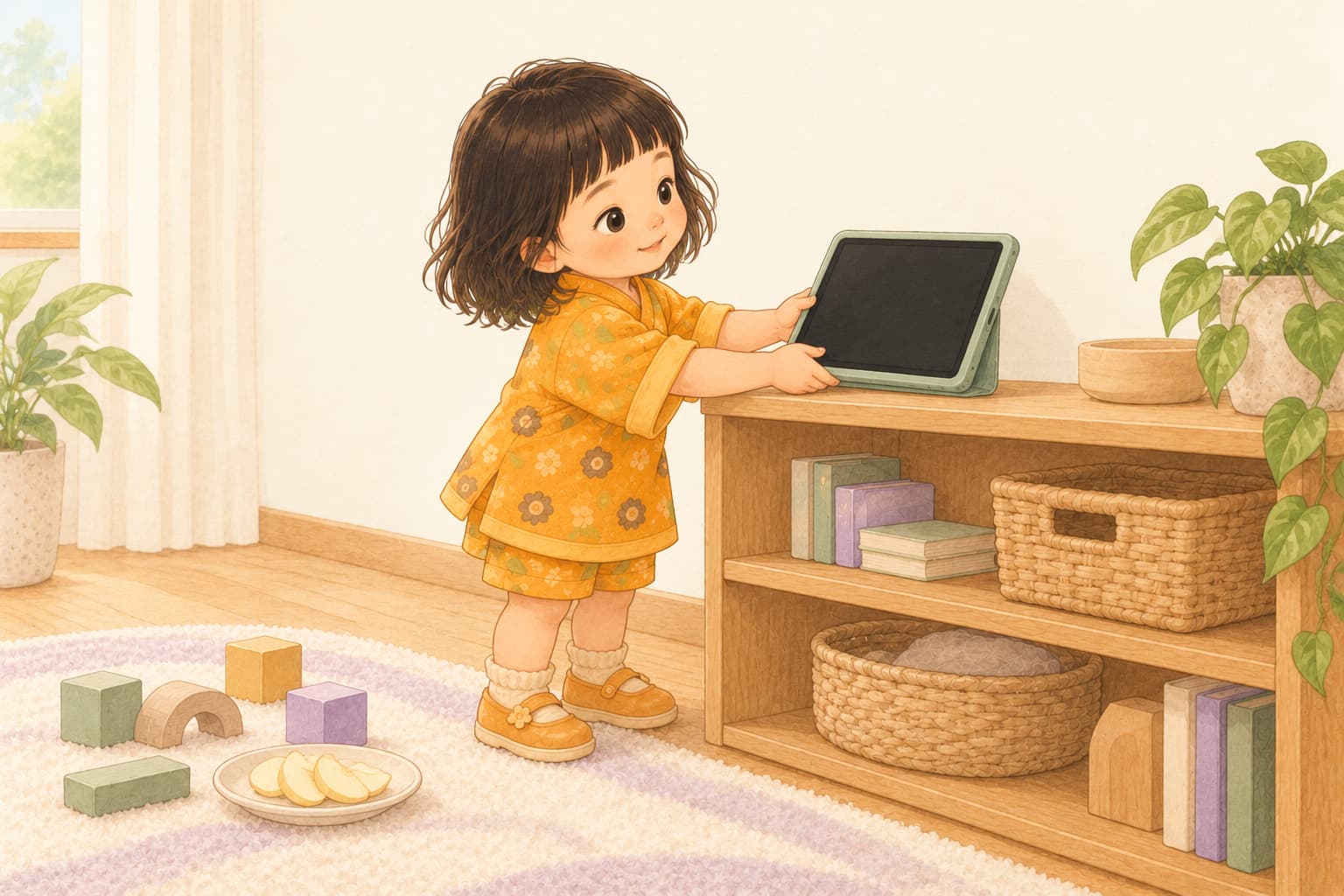
Some children find it easier to stop when they get to do the ending themselves: press the last button, say “goodnight, tablet”, or carry it to where it lives. Something being taken from you can feel very different from something you put away yourself.
5. Have somewhere to go next
“Stop” is easier when there’s a “now we…” after it. A snack, the bath, a walk to the post box, or the blocks waiting on the rug. Having it ready before the ending helps.
6. Name the feeling, and keep the ending
If they’re upset, you don’t need to argue or explain again. “You wish you could keep playing. It’s hard to stop. It’s time to stop now.” You can be kind about the feeling and still keep to the ending.
We’ve written more about this in staying close to a frustrated toddler.
7. Keep it the same each time
The same ending, said the same way, can become something they know. It won’t always stop the tears, but it gives them less to push against.
Some days it ends in tears whatever you do, and that’s ordinary. If screen time or big feelings around it are worrying you, your child’s doctor, health visitor or nursery can talk it through.
Where Little Meadow stands
We’ve tried to make endings easy to reach in our own app. Each game has a defined round with an end. Your child can return to the shelf or, if their daily limit hasn’t been reached, choose to play again. If you set a daily limit and it is reached, the round in progress can finish. When your child returns to the shelf, a goodnight screen with Dawny or Page appears: “The meadow will be right here tomorrow.”
Little Meadow is out. You can hold it up against everything here.