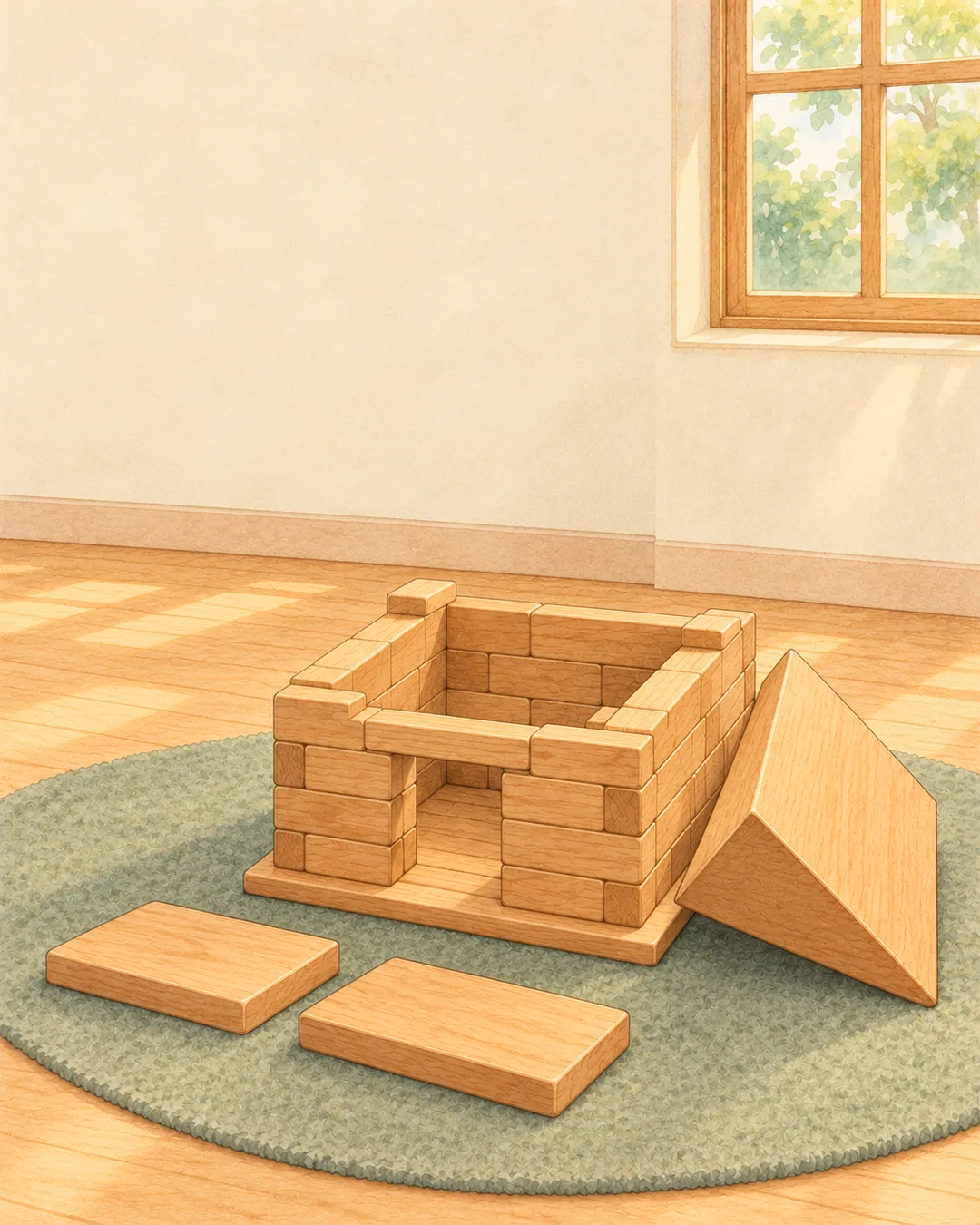

1. Give it a moment
When the roof falls, the quickest fix is to do it for them. Waiting a few seconds first lets your child show you what they need.
In the story, Mum reaches for the blocks and Dad says softly, ‘Let’s give her a moment. We’re right here.’ Staying close without taking over says the same thing.
2. Put the feeling into words
A short name for the feeling helps: “It’s frustrating when it won’t work.” You aren’t asking them to stop feeling it, only showing that you’ve seen it.
When your child names it themselves, as Dawny does with “I’m angry”, that’s worth noticing too.
3. Offer a choice: someone beside you, a break, or another idea
Different children want different things when something is hard. Some want company, some want to walk away for a minute, some want a new plan. Asking lets them choose: “Would you like me to sit with you, or would a little break help?”
4. Come back with a question
After a break, a question often goes further than a solution: “What else could hold the roof?” Then let them look. If it still won’t work, that’s all right too. It can wait until tomorrow.
5. Agree that it was hard
When it finally works, you don’t need a big cheer. “That was hard.” “It was.” Agreeing that something was difficult can mean more to a child than praise.
Some days nothing helps, and that’s ordinary too. If big feelings are worrying you, your child’s doctor, health visitor or nursery can talk it through.