1. A turn, not a giveaway
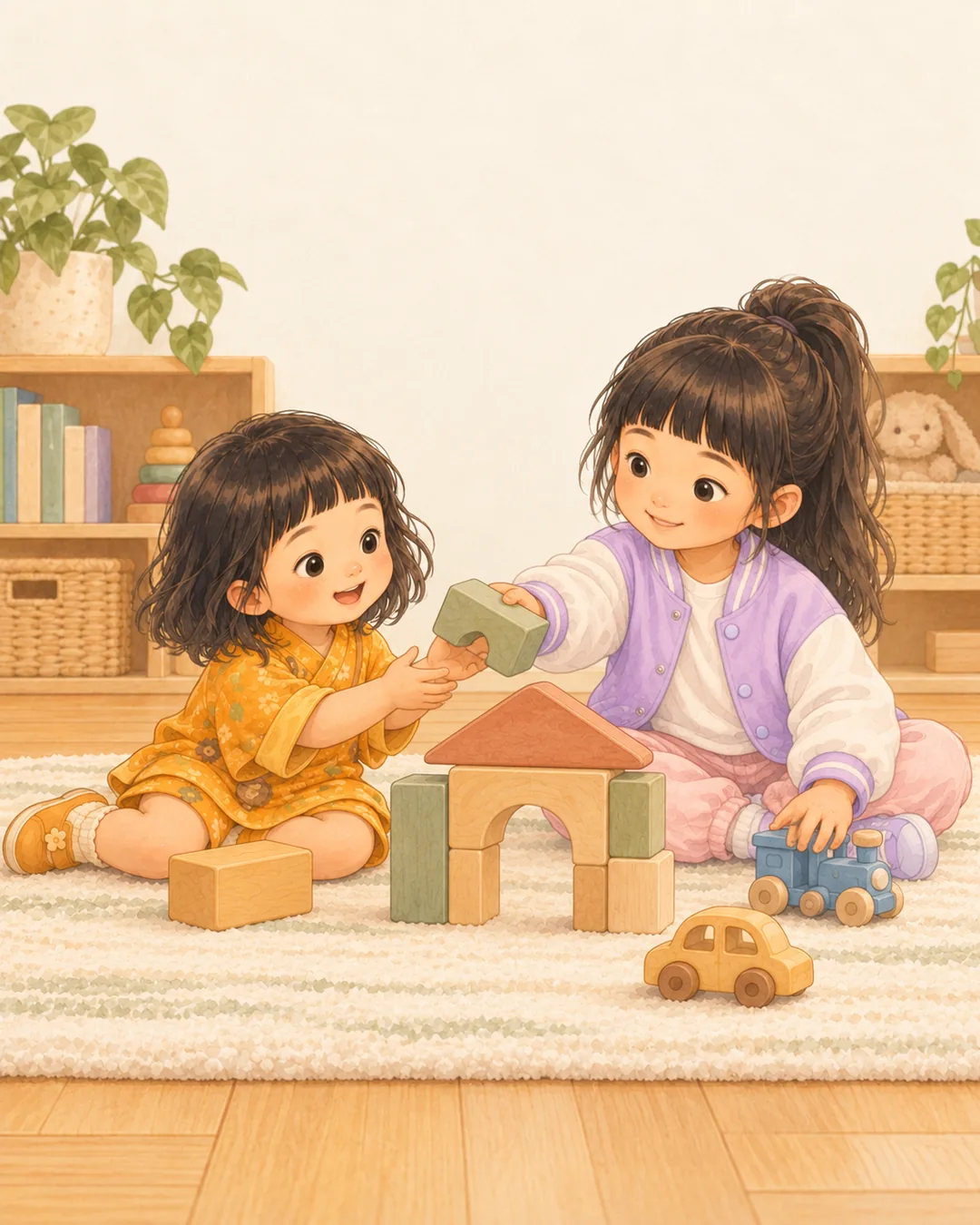
To a two-year-old, “share” can sound like “give it away for good”. A turn with a clear end is easier to agree to: “You can have it after this bit,” or “When the song ends, it’s your sister’s turn.”
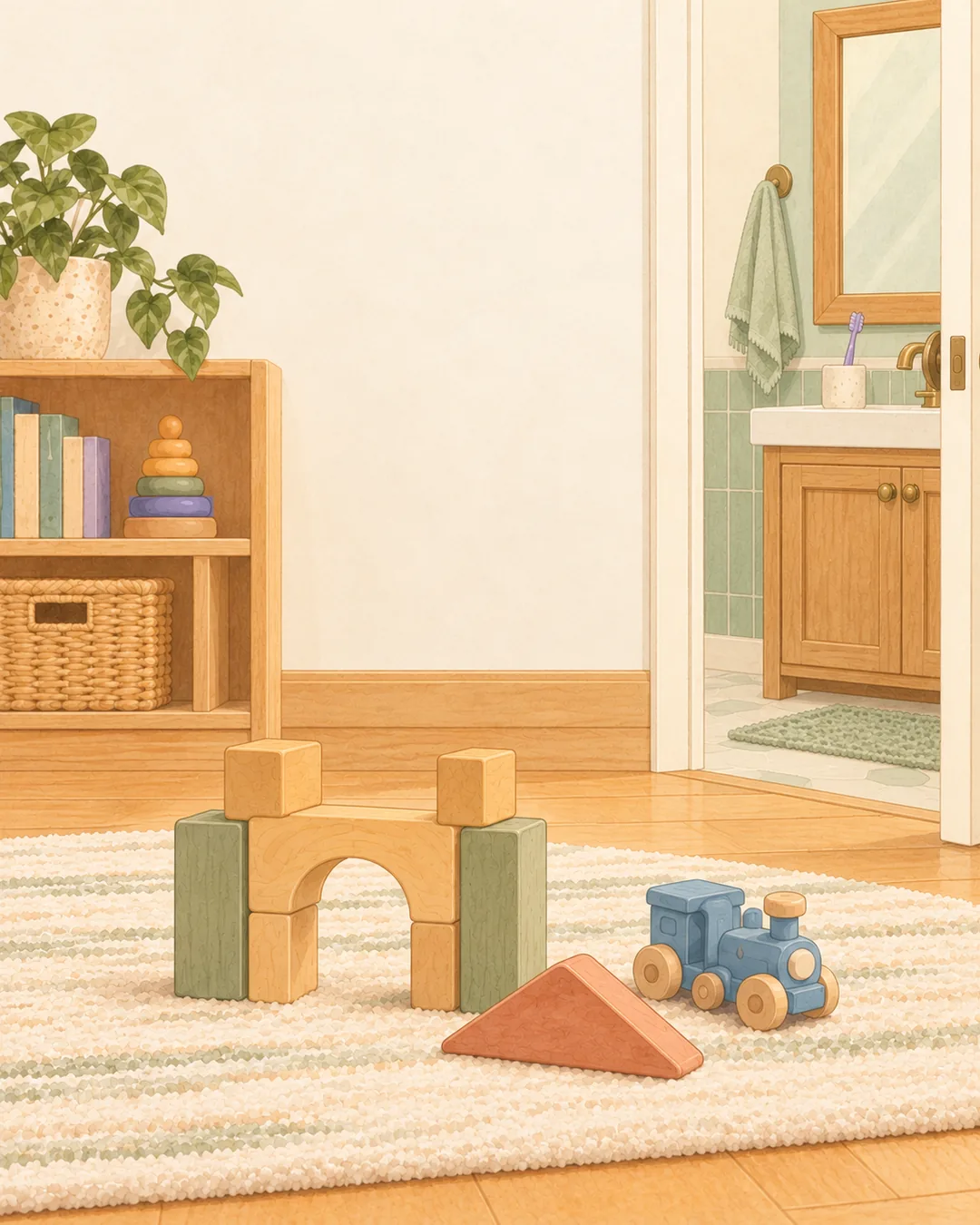
In the story, Page asks to build and Dawny says, “After this bit—then yes.” Then she keeps her word. The keeping is the part that makes the next “after this bit” believable.
2. Asking first
Asking gives the other child a choice, and a choice is easier to say yes to than a grab. Practise the words in a calm moment, not in the middle of a tussle: “Can I have a turn?” “Can I build with you?”
It helps to ask them, too, before you borrow their crayon or move their tower. They learn the words from hearing them.
3. “Not right now” is allowed
Grown-ups don’t lend out everything they own, and children can keep a favourite thing for a while as well. “Not right now” is a kind answer, and it often turns into “now” a little later.
If one toy is too special to share at all, put it away before friends come round. That avoids a fight nobody needs.
4. Some things we each keep our own
A toothbrush, a drink someone is halfway through, a bedtime comforter: some things stay with one person. Give the reason in a sentence a child can repeat, as Dawny does: “Little germs can travel on toothbrushes. We each use our own.”
A reason they can say back to you is easier to hold on to than a rule.
Every child is different, and some days nothing works. If sharing or play with other children is worrying you, your child’s doctor, health visitor or nursery can talk it through.